

Rory’s Renewal: A New Treatment Brings Hope for Hunter Syndrome
Looking back, Kylie saw the signs.
“Rory wasn't talking by 15 months. His hair was coarse. His nose had a distinctive shape. His belly seemed larger than expected. His arms were becoming stiff.”
At the time, they were just small pieces of the seemingly unsolvable reason why Rory was developing differently than others his age. He attended speech therapy, occupational therapy, behavioral therapy and more. But without a diagnosis, they were treating symptoms — not the cause.
"We never had the full picture," said Kylie. "It felt like we were navigating with an outdated map."
Luckily, Rory’s primary care provider acted quickly and referred Rory to genetic specialists at Children’s Wisconsin. Based on Rory's features and medical history, the genetics team diagnosed him with Hunter syndrome.
"I couldn't even find the words to call Rory's dad," Kylie said. "I couldn't bring myself to say out loud that our perfect boy had a terminal disease."
How Hunter Syndrome Affects the Body
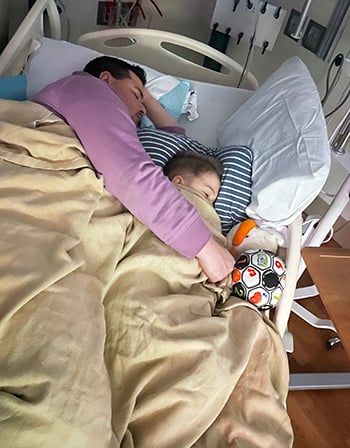 Hunter syndrome, a rare inherited condition that affects approximately 1 in 162,000 male births, prevents the body from breaking down certain complex sugars. Over time, those sugars build up inside cells and can damage the heart, joints, bones, liver and brain. Severe cases cause developmental delays early in life. Without treatment, many experience cognitive decline as they grow older.
With a formal diagnosis, the Children’s Wisconsin Genetics and Genomics Program became Rory’s medical home. They coordinate care across specialties, track how the disease is affecting his body and help his family navigate a complicated journey.
"We feel so fortunate that Children's Wisconsin has phenomenal specialists in so many different fields," said Kylie. "Whatever is concerning me with Rory, I know we'll be connected to a quality provider who can help."
A Game-Changing Treatment
For many years, the only FDA-approved treatment for Hunter syndrome helped manage physical symptoms. It could improve problems with the heart, liver and other organs.
But it couldn't reach the brain.
In 2026, a new therapy was approved by the FDA. This new enzyme replacement therapy — called Avlayah — crosses the blood-brain barrier. That means it can reach the central nervous system.
“Our hope is that this treatment can slow, stop or even reverse some of those central nervous system symptoms, including developmental delays, behavioral changes and cognitive decline in kids with the severe form of Hunter syndrome,” said Michael Finkel, DO, a Pediatric Genetics Specialist at Children’s Wisconsin.
For kids like Rory, this new treatment means everything.
"This means time," said Kylie. "Time to hold onto the progress he's made and hope that one day even more treatments become available."
Ready the Moment Hope Arrived
Even before the treatment was FDA-approved, Rory's family and the Children's Wisconsin team were preparing together.
Kylie followed every update closely. She stayed in touch with his genetics team, asking questions and making a plan in case the treatment became available.
When the FDA announced its approval, Children's Wisconsin was ready to move
The team had already completed Rory's baseline evaluations. They had coordinated with pharmacists and insurance providers, built his treatment plan and prepared for his first infusion.
That quick work helped Children's Wisconsin become the first hospital in the country to provide the newly approved treatment.
"We're very committed to bringing promising new therapies to patients as soon as they're safely available," said Dr. Finkel, who is also an Assistant Professor of genetics at the Medical College of Wisconsin, the academic partner of Children’s Wisconsin. "Our team stays closely involved with advances in rare genetic diseases and works hard to make new FDA-approved treatments available without unnecessary delays."
Every Treatment Day
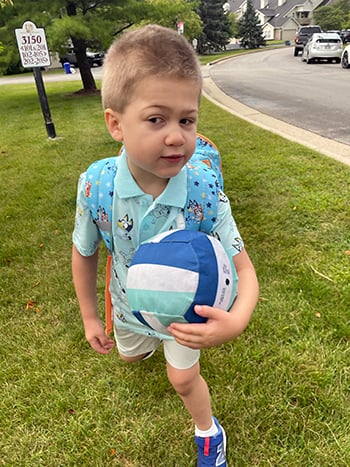 Now, Rory receives an infusion every week.
Treatment days last about six hours. His care team accesses his port, completes routine assessments and monitors him throughout the infusion. They then observe him afterward to make sure he's doing well.
The therapy is expected to continue for the foreseeable future.
While infusion day is a long one, for Rory's family, it's also filled with possibility. Clinical studies suggest meaningful improvements may take one to two years. His care team will continue to monitor his progress closely over time.
“Mom has expressed some behavioral traits that have improved that she believes are evidence it's working already,” said Dr. Finkel.
Looking to the Future
Rory's story represents more than one family's journey.
Dr. Finkel expects Hunter syndrome to be added to newborn screening panels in the future. That means children could be diagnosed before symptoms appear. Earlier detection means families could start treatment much sooner.
Because Children's Wisconsin already has experience with this therapy, the team is preparing for that future now.
For Kylie, that future gives her hope — not only for her son, but for every family that may one day hear the words "Hunter syndrome."
"Children's Wisconsin showed up in every way we needed them to. Finding the right care while navigating a disease like this means everything,” said Kylie. "There is real hope now.”
Children's Wisconsin Resources

Written by
Writer
Related Stories
No related articles found.