
Peritoneal Dialysis (PD) Catheter Exit Site Care
What is a Peritoneal Dialysis (PD) Catheter?
A PD catheter is a small, thin tube placed in your child’s belly during surgery. It is used to do peritoneal dialysis.
Peritoneal Dialysis (PD) Catheter Exit Site Care
For the first 6 weeks after placement:
- The site will be covered with a sterile dressing.
- A dialysis nurse will change the dressing once a week in clinic.
- The dressing may need to be changed sooner if it becomes wet, dirty, or loose. This will also be done in clinic.
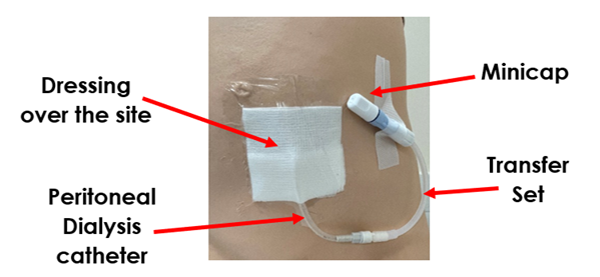
After 6 weeks and peritoneal dialysis education and training have been completed:
- You will be able to clean the catheter site and change the dressing at home. Daily site care helps prevent infection.
- The dialysis nurse will teach you how to do this.
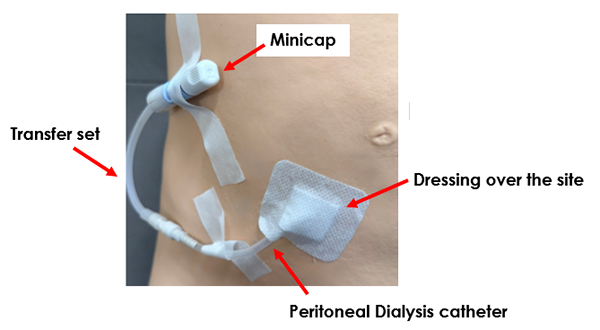
Can My Child Take a Bath with a PD Catheter?
For the first 6 weeks after PD catheter placement:
- No tub baths. Only sponge baths are allowed. Do not let the PD catheter site go underwater.
- There is no swimming or water play in sprinklers, or splash pads.
- Keep the catheter and dressing dry.
After 6 weeks and peritoneal dialysis education and training have been completed:
- Showers are okay. Showers are recommended over tub baths.
- Your child can also continue sponge or do tub baths. If tub baths are needed, the water level must be below the catheter exit site.
- There is still no swimming or water play in sprinklers, or splash pads.
Education and Training for Peritoneal Dialysis
When your child is ready to begin peritoneal dialysis, the dialysis nurse will schedule education and training with you. This usually starts about 6 weeks after the PD catheter is placed as directed by the kidney provider, but may start sooner if needed. Training usually takes about 32 to 40 hours. The length may be shorter or longer, depending on your needs. Two caregivers and your child must attend the training.
The education and training will teach you how to:
- Complete peritoneal dialysis at home.
- Clean your child’s PD catheter exit site safely at home.
- Change the PD catheter dressing at home.
How to Complete Peritoneal Dialysis (PD) Catheter Site Care:
Special information:
- Do not cut tape with scissors close to the catheter.
- Do not use powder or lotion around the exit site.
Supplies:
- 2 packages of sterile 4x4 gauze (4 gauze total)
- Antibacterial soap
- Gentamicin cream
- Tape or SePro® netting
- Tegaderm™ and Island dressing, if needed
- Masks
If your child has any of these signs below around the PD catheter exit site, call the Dialysis Care Team (kidney provider).
- Redness
- Tenderness
- Drainage
- Leaking
- Swelling
- PD catheter gets pulled out and the cuff is showing.
What Should You Do if the PD Catheter Gets Pulled Out and the Cuff is Showing?
- Clean the exit site and cover it with a clean dressing.
- Then call the Dialysis Care Team (kidney provider).
Steps to Complete PD Catheter Site Care:
- Gather your supplies and set them on a clean, dry surface.
- Put a mask on self, child and all others in the area.
- Wash your hands with soap and water.
- Remove the old dressing and check the catheter exit site for:
- Redness.
- Swelling.
- Tenderness.
- Drainage.
- Clean the catheter exit site as taught by your Dialysis care team by using one sterile 4x4 gauze, antibacterial soap and water.
- Use one sterile 4x4 gauze soaked with water to remove any soap residue.
- Use one sterile 4x4 gauze to pat dry the area around the catheter exit site.
- Use one sterile 4x4 gauze to place a thin layer of Gentamicin cream (size of a pea) lightly around the exit site.
- Put on Island dressing and Tegaderm™ if needed.
- Secure catheter with tape or SePro® netting to prevent pulling.
Draft Number: 1967Revision Date: July 14, 2026