
Therapeutic Listening Quickshifts
What is Therapeutic Listening Quickshifts?
Therapeutic Listening Quickshifts is a special sound-based treatment tool that uses music. The music is specifically designed with different rhythms, music patterns, and tones to help the brain perform better. The music is chosen for each child based on their needs in the moment. For example, music may be chosen to help your child calm down, while other music helps them become more alert and focused.
Who Can Benefit from this Sound-based Tool?
This tool can help children of all ages, with or without a specific diagnosis. It is most recommended for those with challenges in the following areas:
- Sensory regulation: Learning how to manage sensory input such as sounds, sights, touch, or movement. This helps to stay calm, focused and ready to take part in activities.
- Emotional regulation: Learning healthy ways to understand and manage feelings.
- Anxiety: Feeling worried, nervous or stressed.
- Retained reflexes: Automatic baby movements that stay active longer and may affect learning, attention, or balance.
- Feeding difficulties: Problems with eating, drinking, trying new foods or mealtime routines.
- Motor coordination: Learning skills for balance and movement and everyday activities.
- Attention and executive function difficulties: Learning everyday skills like being aware of feelings and actions, handling emotions and using self-control.
What are the Benefits of This Sound-based Tool?
Your child may:
- Respond to sound or noise with less discomfort.
- Pay attention and stay focused longer.
- Fall asleep quicker and wake up more rested.
- Move their body more smoothly with better coordination across their body.
- Build better social skills.
- Manage their feelings better.
- Improve speech and feeding skills.
- Persist with tasks that are challenging.
- Feel calmer when they are worried or anxious.
How and When Does Your Child Use It?
Your child can use the sound-based tool at the clinic during therapy, at home, school, or daycare.
- Have your child listen to the music album from start to finish. This is usually 15 to 20 minutes long.
- Use headphones that cover the ears. If an item has a right and left side, make sure it is placed on the correct side of the child's body.
- Listen to the music album 1 to 2 times per day:
- Before an activity that may be hard or stressful.
- During an activity to help with focus or attention.
- Do not listen while watching TV, using a tablet or during other screen time.
- Use along with other sensory tools and activities for the best results. Your Occupational Therapist (OT) will help choose the tools and activities that are right for your child.
How Do I Get Started?
Your child will need headphones and access to the special music albums. There are 2 options for purchase of the music albums:
Option 1: Use the Therapeutic Listening App

- Download the Vital Links Therapeutic Listening App on the device your child will use (phone, Ipad, tablet). For Apple users, the App is Apple ID specific, so it will only work on 1 device.
- Set up the App. For more information on how to download the App, go to Vital Links Support.
- Use the App to purchase the specific Quickshift albums assigned by your therapist and are listed below.
Option 2: MP3 Player
- Purchase an MP3 player and headphones.
- Visit the Vital Sounds website to purchase the Quickshift MP3 chips assigned by your therapist listed below.
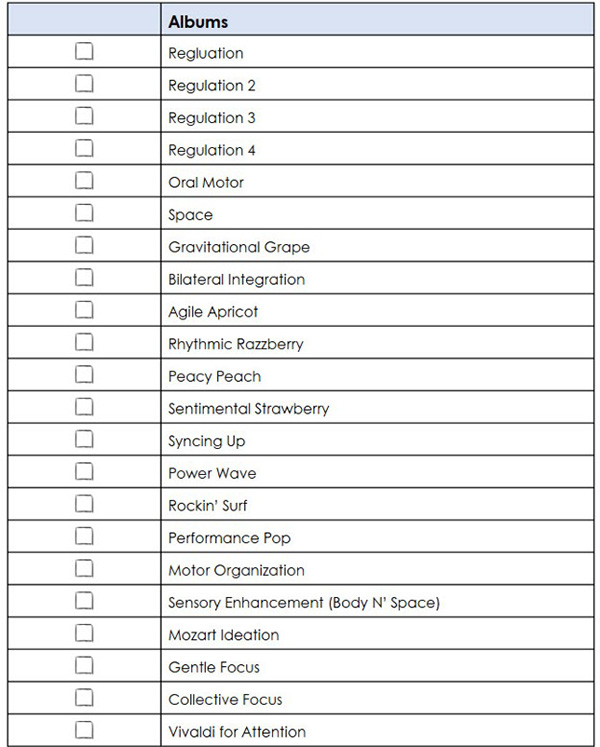
Your OT Recommends the Albums Checked Below:
To Learn More About Quickshifts, Review This Resource:
Draft Number: 1745Revision Date: August 26, 2026