
E-Bikes, E-Scooters and E-Motos: Speed Changes Everything
What are E-bikes, E-scooters, and E-motos?
E-bikes (electric bicycles), e-scooters (electric scooters) and e-motos (electric motorcycles or dirt bikes) and are becoming more popular with kids and teens. Unlike regular bikes and scooters, they do not provide much exercise. They go much faster than regular bikes and scooters so they can be more dangerous. Crashes can cause very serious injuries or death.
These injuries can include:
- Broken arms and legs.
- Burns from tires.
- Concussions or other brain injuries.
- Injuries to organs like the kidneys or spleen.
- Broken teeth or injuries to the face.
Some of these injuries can have lasting effects and change a child’s life.
What Do I Need to Know About E-bikes?
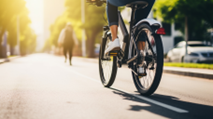
There are 3 different classes of e-bikes.
Class 1
- Works only when the rider is pedaling (pedal assist).
- Does not have a throttle.
- Motor assist up to 20 mph.
Class 2
- Has a throttle, so the bike can move without pedaling.
- Can go up to 20mph.
Class 3
- Works only when the rider is pedaling (pedal assist).
- Has a throttle, so the bike can move without pedaling.
- Motor assist up to 28 mph.
- For ages 16 and up.
What Do I Need to Know About E-motos and E-scooters?
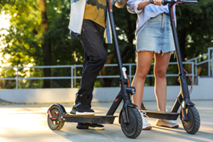
E-motos
- They use a hand throttle to move. Riders do not need to pedal.
- They can go very fast, about 30 mph to over 60 mph.
- They are not allowed on bike paths or sidewalks.
- Most city streets only allow them if they are registered and the rider has a motorcycle license.
E-scooters
- They use a motor and do not require pedaling.
- They can go 25-30 mph.
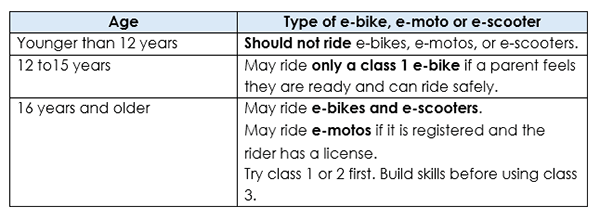
Who Should Ride?
Why Are More Kids Getting Hurt?
These vehicles:
- Go much faster than regular bikes.
- Give riders less time to react.
- Take longer to stop.
- Are heavier, so crashes can be more serious.
- Often share the road with cars and people walking.
Many children who get hurt were not wearing a helmet or wearing the wrong type of helmet.
How Can You Help Your Child Ride Safely?
Help keep your child safe by making sure they:
- Wear a helmet every ride.
- Wear closed-toe shoes.
- Wear bright clothing.
- Use lights while riding at dusk or in the dark.
- Know the rules of the road.
- Watch for people walking and for cars.
- Keep their phone put away.
- Do not wear earbuds or headphones while riding.
- Never carry another person on an e-bike or e-scooter.
- Follow local rules for riding.
What Kind of Helmet Should Your Child Wear?
A regular bike helmet may not protect your child in a high-speed crash. Choose a helmet made for faster speeds.
Look for one with one of these safety labels on the inside liner of the helmet:
- ASTM F1952
- NTA 8776
- DOT
Every rider should wear a properly fitted, speed-rated helmet every time they ride.
Is Your Child Ready?
Think about if your child can:
- Follow traffic rules.
- Always pay attention.
- Stay off their phone while riding.
- Make safe choices, even when friends are around.
You can ask yourself:
Would I trust my child to safely ride a motorcycle or moped?
If the answer is no, your child is probably not ready for an e-bike, e-moto, or e-scooter.
To learn more about how to choose the correct helmet, review this resource:
Draft Number: 2066Revision Date: August 11, 2026