

Home Is Where the Heart Is: Why One Family Moved Across the Country for Cardiac Care
On April 29, 2025, at 24 weeks pregnant, Maura and her husband, Parker, sat in a Montana imaging room, about to receive life-changing news.
Maura’s anatomy ultrasound revealed that their first baby, Estelle, had tetralogy of Fallot. This combination of congenital heart defects occurs when the heart doesn’t develop properly very early in pregnancy.
Those words felt heavy and familiar to Maura. She had learned about tetralogy of Fallot while studying to become a physician assistant.
Estelle faced a complex diagnosis requiring careful monitoring for the rest of the pregnancy and specialized cardiac care after birth. She would also need surgery within the first six months of her life.
Because there were no pediatric cardiothoracic surgeons in Montana, their cardiologist proposed surgery in Denver or Seattle once Estelle was born. Having just moved to Montana from Wauwatosa, Wisconsin, Maura asked the cardiologist what she thought of Children’s Wisconsin. She said it would be a great plan.
“When you grow up in Wisconsin, and a kid needs something, they go to Children’s Wisconsin,” said Maura. “Now it was our baby, and it was critical. It just seemed like a no-brainer.”
A Path Forward
The process quickly got underway. The family was connected with David Saudek, MD, a Pediatric Cardiologist at the Herma Heart Institute, who supports the Fetal Heart Program in the Children’s Wisconsin Fetal Concerns Center.
During one of the hardest weeks of their lives, Dr. Saudek gently laid out what tetralogy of Fallot could look like and what to expect. He explained that it could range in severity — some babies need surgery in the first three days, and others can safely wait for months. They would know more when Estelle was born.
“We had never met Dr. Saudek, but he called us on our worst day. He was calm, kind and warm — and just kept saying, ‘What other questions do you have? What else can I do?’” said Maura. “He never rushed us. He answered every question, even if we asked it 50 times. He made us feel like we were doing a great job, even when we felt like we weren’t.”
That’s when Maura and Parker began making plans to move back to Milwaukee so they could be seen at Children’s Wisconsin. In June 2025, at seven months pregnant, they flew home to meet the fetal heart team.
“We met with a cardiologist and saw the Fetal Concerns Center. They did an echo and laid out everything with such clarity,” said Maura. “After that, choosing to relocate felt obvious.”
The plan was to carry Estelle to term, monitor her closely and deliver in Milwaukee. They moved back to Wisconsin for the last stretch of Maura’s pregnancy and the first months of Estelle’s life. During that time, they were surrounded by family, friends and an exceptional care team who made a difficult path easier to navigate.
“Before that June visit, we said, if we’re not 100% sure, we’re checking other places. We’re not settling for second best,” said Parker. “But every step with Children’s Wisconsin made us confident we were making the right decision.”
Meeting Estelle
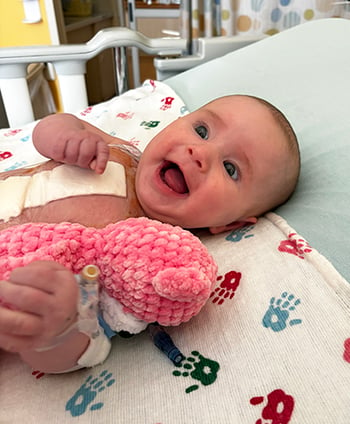 When Estelle made her grand debut, her oxygen levels were lower than expected — low enough to need extra monitoring. But she stabilized quickly. Maura and Parker were able to take her home and enjoy those precious moments with the baby they had waited so patiently for.
The cardiology team felt confident waiting until she reached the ideal size and strength before going ahead with surgery.
“If a baby’s oxygen levels are high enough, we prefer to wait a few months so they can grow stronger before surgery,” said Dr. Saudek.
With tetralogy of Fallot, crying can sometimes trigger significant drops in oxygen levels, known as tet spells. These can cause blue/gray skin, rapid breathing and irritability. The risk of complications for Estelle was considered very low, and the family went home with a pulse oximeter for added peace of mind.
Still, like many parents navigating a heart diagnosis, Maura and Parker found themselves paying close attention to every detail. Even with that reassurance, the possibility of tet spells weighed on them. Parker recalled questioning every sound. He said their goal was to keep her happy and minimize crying.
Surgery Day
By December, Estelle was ready for surgery. She had been growing and thriving — a busybody baby who loved to be “in the mix,” her parents said.
At about 15 weeks old, with a heart roughly the size of a walnut, Estelle underwent open-heart surgery. During the surgery, she was supported by a heart-lung bypass machine that took over the work of her heart and lungs during the procedure. The goal of the surgery was to repair the key components of tetralogy of Fallot, so her heart could pump blood more effectively.
“Estelle’s surgery involved closing a ventricular septal defect — a hole in her heart — and opening up the outflow tract from the right side of the heart to the lungs to remove obstruction,” said Dr. Saudek.
The team provided hourly updates, and when the surgery was done, they brought Estelle up to the Cardiac Intensive Care Unit. Maura and Parker saw her briefly, then waited as the team connected what felt like a web of wires and monitors.
The first time she woke up, she was screaming. “That was the hardest part,” said Maura. “Watching her in pain and not being able to make it better. We had a lot of feelings of helplessness.”
An Unexpected Setback
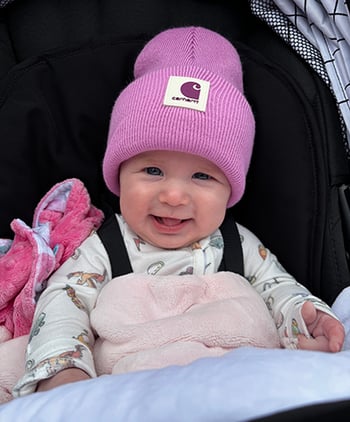 Initially, her recovery progressed ahead of schedule. If everything looked good on the discharge echo, she could go home the next day.
But just before doctors were ready to send her home, imaging revealed a concerning collection of blood over her right atrium — the upper-right chamber of her heart. The plan was to watch it and recheck the next day.
The next day, it hadn’t changed.
“They thought they might just need to remove a stitch or two and suction it out,” said Maura.
“But when they got in there, it was the size of a large strawberry.”
They had to reopen her chest to remove a blood clot. While rare, the complication was addressed promptly, and Estelle recovered even more quickly after the second procedure.
After that second surgery, Maura held on to the surgeon’s advice: “Treat her like any other baby. Let her live a normal life and do normal things. It would be a disservice to treat her differently.”
“Sometimes I just think how incredible it is that they can fix an 11-pound baby’s heart,” said Parker. “It’s humbling.”
A Busy Adventure Baby
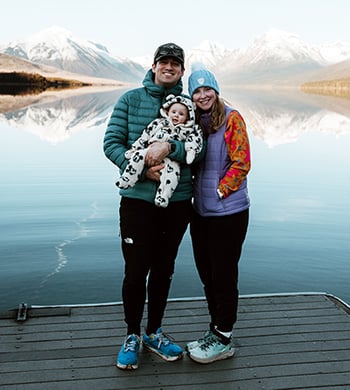 Today, Estelle is 10 months old and thriving. She’s curious, calm and happiest when outside, taking in the world around her. Since returning to Montana in January, the family spends as much time as possible in Glacier National Park, soaking in its beauty.
“Today, outcomes for children with tetralogy of Fallot are excellent. We expect children born with tetralogy to live active, healthy lives,” said Dr. Saudek.
Estelle’s follow-up care is shared between her cardiologist in Montana and Dr. Saudek’s team at Children’s Wisconsin. She’s also enrolled at the HOPE (Healthy Outcomes Post-ICU Engagement) Developmental Follow-Up Clinic at Children’s Wisconsin to monitor developmental milestones and get support as needed.
Because kids with tetralogy of Fallot can require additional procedures as they grow, her cardiology team will continue to monitor her into adulthood.
“At the Herma Heart Institute, our goal is to support families from diagnosis through recovery and beyond, so they never feel like they’re navigating this alone,” said Dr. Saudek. “Our multidisciplinary team works closely together and is always focused on improving outcomes through collaboration, new ideas and advances in cardiac care.”
For Estelle’s family, choosing Children’s Wisconsin was about comprehensive expertise, continuity of care and community. They describe feeling supported at every step, from fetal concerns and maternal-fetal medicine to cardiology and surgery. That combination, along with being near extended family, provided unwavering support during a difficult time.
“The team at the Herma Heart Institute lifted us up when we really needed it,” said Maura. “They're the people who brought light into our darkness.”
Children's Wisconsin Resources

Written by
Writer
Related Stories
No related articles found.