
Vitamin K Shot for Newborns: Protecting Your Baby from Dangerous Bleeding
Making decisions about your baby’s health is one of the most important jobs you have as a parent. It can also feel scary or stressful at times. Your health care team is here to support you and help your baby stay healthy.
What is Vitamin K?
Vitamin K helps the blood clot normally and prevents bleeding.
Why do Newborns Need a Vitamin K Shot at Birth?
Newborn babies are born with very low levels of vitamin K. Most vitamin K comes from bacteria in the intestines and from the foods we eat. Because newborn babies have very little bacteria in their intestines at birth and do not begin eating solid foods until about 4 to 6 months of age, they are unable to make or get enough vitamin K on their own. As a result, a vitamin K shot is given shortly after birth to help prevent dangerous bleeding problems.
What Can Happen Without Vitamin K?
Without enough vitamin K, newborn babies can develop a dangerous bleeding problem called Vitamin K Deficiency Bleeding (VKDB). This bleeding can happen during the first few months of life. Babies with VKDB may look healthy before the bleeding starts. Vitamin K Deficiency Bleeding (VKDB) can cause bleeding in the:
- Brain. Bleeding in the brain may occur without warning signs and can cause permanent brain injury or death.
- Intestines.
- Umbilical cord.
- Skin.
How Can You Prevent Vitamin K Deficiency Bleeding (VKDB)?
Since this bleeding can happen suddenly, it is recommended newborns receive a vitamin K shot shortly after birth to help prevent VKDB. The vitamin K shot is not a vaccine or an immunization.
How Common is Vitamin K Deficiency Bleeding (VKDB)?
In babies who do not receive the vitamin K shot at birth, early VKDB occurs in about 1 in 60 to 1 in 250 newborns, and late VKDB occurs in about 1 in 14,000 to 1 in 25,000 babies, usually between 2 and 12 weeks of age.
Are There Side Effects From the Vitamin K Shot?
The vitamin K shot is very safe. The most common side effect is brief pain or discomfort where the shot is given. Parents may hold, comfort, or feed their newborn during the shot. Vitamin K shots have been given to newborns since the 1960's and no long-term health concerns have been reported or proven. The package insert includes a warning about serious reactions in adults who receive vitamin K. These reactions have not been reported in newborns receiving the vitamin K shot after birth.
Is Oral Vitamin K as Effective as the Vitamin K Shot?
No. Oral vitamin K does not protect newborns as well as the vitamin K shot. In the United States, there is no FDA-approved oral vitamin K product for newborns.
Is Increasing a Breastfeeding Mother’s Vitamin K Intake as Effective as the Vitamin K Shot?
No. Increasing a mother's vitamin K intake is not as effective as giving the vitamin K shot to a newborn. Vitamin K does not pass into breast milk very well, even when a mother eats foods high in vitamin K or takes vitamin K supplements.
Circumcision
The vitamin K shot is required by our providers before the procedure. After the vitamin K shot is given, blood clotting usually returns to normal within about 2 hours. Without the vitamin K shot, newborns have a much higher risk of bleeding during and after circumcision.
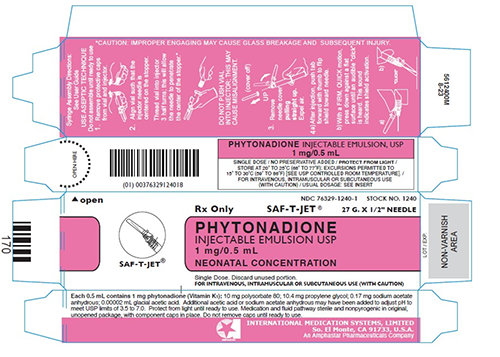
Ingredients:
- 1 mg of Vitamin K1, a fat-soluble vitamin derived from plants.
- 10 mg of Polysorbate 80, which is an emulsifier that helps Vitamin K1 (a fat-soluble Vitamin) dissolve in liquid for the injection.
- 10.4 mg of Propylene glycol, which helps absorb extra water and keeps the vitamin K in solution.
- 0.17 mg of Sodium acetate anhydrous, a mixture of salt and bicarbonate, is used to adjust the pH of the injection.
- 0.00002 mL of Glacial acetic acid, also known as vinegar, is used to adjust the pH of the injection.
Draft Number: 1943Revision Date: August 31, 2026