
Pectus Carniatum
What is Pectus Carinatum?
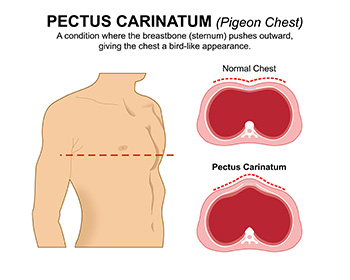
Pectus Carniatum is when the front of the chest wall, called the breastbone, sticks out. It is often called “pigeon breast”. It can happen in both boys and girls, but it is more common in boys. It is often noticed during the middle school and high school years when they are growing quickly. When their bones are done growing, the chest wall does not change any more.
What Causes It?
Pectus Carinatum is a rib length issue. The ribs are too long, causing the breastbone to grow out. Sometimes it runs in families, which means it may be genetic. It is not caused by anything a child has done.
What Are the Symptoms?
Most children do not have symptoms. Some children may have trouble being active. This is because the part of the chest that sticks out can be swollen and sore. Some children with pectus carinatum can also have a curved spine. This is called scoliosis.
How is It Treated?
Bracing
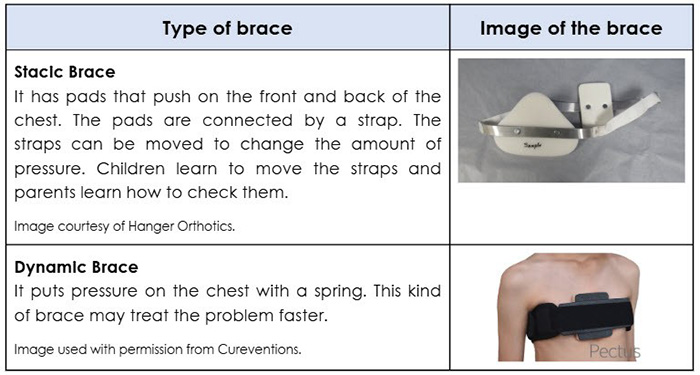
This is done with a brace that pushes on the breastbone. A custom chest brace is used to gently push the breastbone into a flatter position. The best time to start wearing a brace is usually around 13 to 14 years old, while the chest is still growing. If unable to compress the chest by bracing, your child may need surgery.
Surgery
More than 95% of our patients can be treated without surgery. If the brace does not work or the chest cannot be compressed enough, surgery may be needed. The surgery is called a Ravitch procedure. It changes the shape of the breastbone into a flatter more normal shape.
Learn More About the Brace
You will get a prescription for a brace and it will be made by an orthotics company called Hanger. Hanger staff will teach your child how to wear and care for the brace. The brace may cost around $1,300 and insurance coverage varies, but payment plans may be available.
- Your child will need to wear the brace 16 to 22 hours each day.
- The first correction phase usually lasts about 6 months.
- Every child is different, so treatment time may vary.
- After the chest shape improves, the brace is worn fewer hours each day, sometimes only overnight.
- Most children continue wearing the brace during growth for about 2 to 3 years.
Follow up Visits:
Your child will see their surgeon every 3 to 6 months to check their progress. They will also have visits with Hanger Orthotics for measurements, brace adjustments, and fit checks.
Draft Number: 1958Revision Date: August 11, 2026