
Inducible Laryngeal Obstruction (ILO): Formerly known as Vocal Cord Dysfunction (VCD)
What is It?
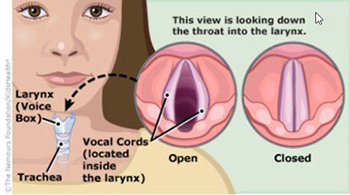
Inducible laryngeal obstruction (ILO) (used to be called Vocal Cord Dysfunction) is a problem that starts in the larynx (throat/voice box), not in the lungs. The larynx tightens or narrows when something triggers it. The narrowing makes it hard for air to move in and sometimes out. This may make you feel like it is hard to breathe.
What Are the Symptoms?
- Hard time breathing in.
- Throat or upper chest feels tight.
- Noisy or high-pitched sound coming from the neck or throat when breathing in (stridor).
- Quick relief (rescue) inhaler does not always help unless asthma is also present.
- May have changes in your voice.
What Causes It?
People with ILO have triggers that can cause their symptoms. Triggers are things or situations that make symptoms start or get worse.
Things that may trigger the problem:
- Exercise.
- Heartburn or acid reflux.
- Allergies, causing drainage from the nose into the throat (post-nasal drip).
- Anxiety or strong emotions.
- Fragrances/odors (Example: Chlorine, perfume)
How is it Diagnosed?
Providers often ask you about your symptoms and health history. This information can help your provider decide if you have ILO. Often, the diagnosis can be made just from symptoms and history alone. You may not need more tests. This may allow you to be fast tracked directly to a Speech-Language Pathologist (SLP). If your symptoms do not clearly fit ILO, your provider may order more tests such as:
- Pulmonary function test: This is a breathing test to measure how your lungs work and how much air can move in and out.
- Laryngoscopy: This procedure uses a small camera or scope to look at your throat and larynx.
- Exercise challenge test: This is a test that checks how your airway works while doing activities or exercise. This may be helpful to understand if you have asthma and ILO.
How is it Treated?
A Speech-Language Pathologist (SLP) will help you to learn:
- Your breathing patterns.
- What triggers your symptoms.
- What to do when you have difficulty breathing. These are called rescue strategies.
- New breathing patterns to prevent ILO.
A team of providers may also be involved. These may include:
- Pediatrician.
- Pulmonary.
- Ear, Nose and Throat (ENT).
- Asthma/Allergy.
- Respiratory Therapy.
- Gastroenterology (GI).
- Psychology.
Your care team will work together to make a plan that is right for you. This plan will help you manage, prevent or stop your symptoms so you can take part in your everyday activities.
To Learn more about ILO, review these resources:
- Inducible Laryngeal Obstruction (ILO) and Asthma Differences
- Rescue Strategies for Inducible Laryngeal Obstruction (ILO)
© 2025 The Nemours Foundation/KidsHealth®. Used and adapted under license by Children’s Wisconsin. This information is for general use only. For specific medical advice or questions, consult your health care professional.
Draft Number: 1197Revision Date: September 30, 2026