
Feeding Your Baby: Birth to 12 Months
Feeding your baby is one of the most important things you can do to support healthy growth and development. During the first year of life, babies grow quickly and need good nutrition. Knowing when and how to start solid foods can sometimes feel confusing. This guide will help you understand your baby's nutrition needs and make feeding decisions with confidence.
Safe Feeding Tips as Your Baby Grows
- When bottle feeding, hold your baby in a semi-upright position and support their head. Do not prop your baby’s bottle.
- Always place your baby in a highchair when feeding solid foods.
- Stay with your baby during meals and snacks to help prevent choking.
- Let your baby practice feeding themselves as they develop new eating skills.
As you start to give your baby solid food, keep giving breast milk or infant formula until your baby is 12 months old.
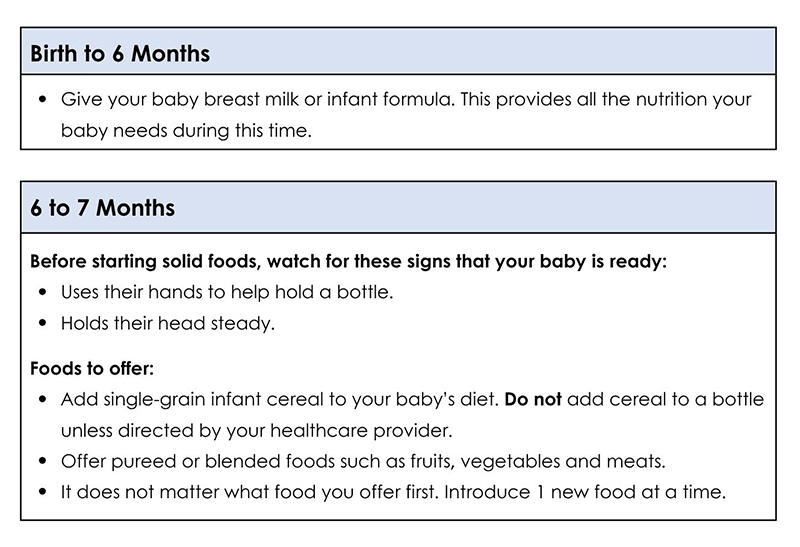
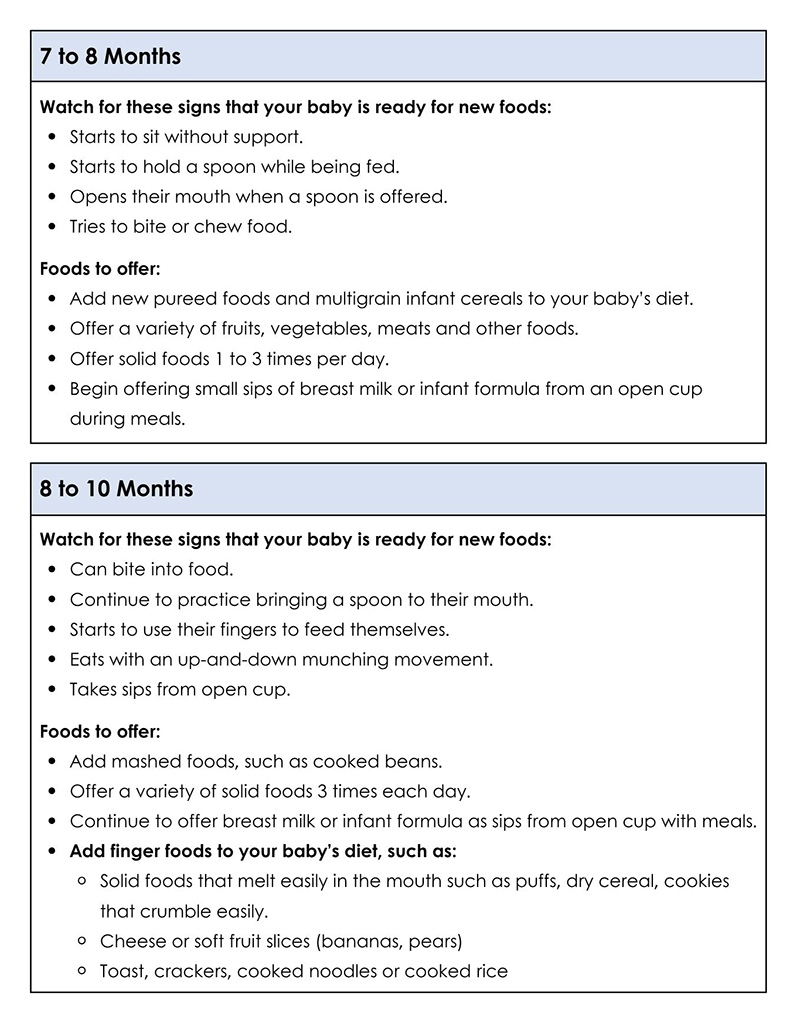
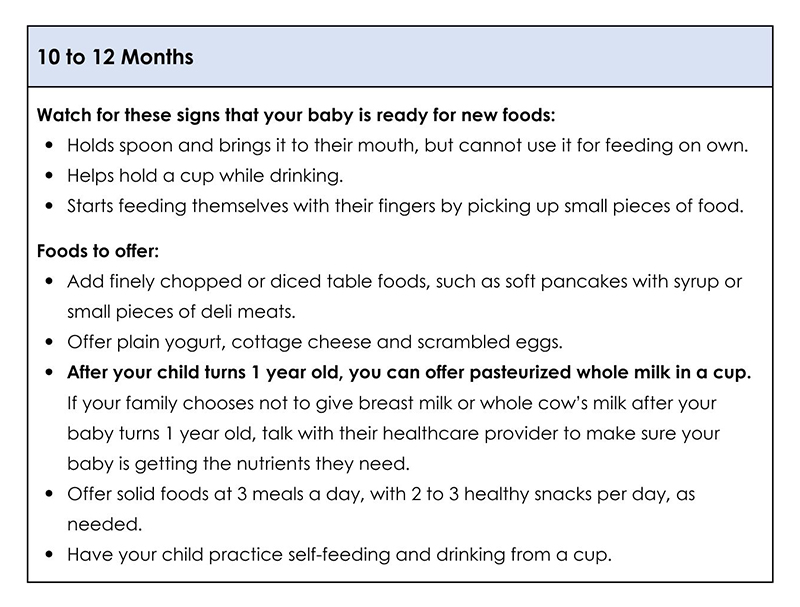
Baby Led Weaning
Some families choose to skip traditional pureed baby foods and offer soft table foods instead. This approach is called baby-led weaning. With baby-led weaning, babies feed themselves by picking up food rather than being fed by a caregiver.
There is limited info about the safety of baby-led weaning, so keep these tips in mind:
- Do not offer foods that could cause your baby to choke. See the Foods to Avoid Giving Your Baby section later in this teaching sheet for more info.
- Always stay with your baby while they are eating.
- It is important for your baby to learn how to eat purees as well as soft table foods. Puree options may include:
- Mashed or blended fruits and vegetables.
- Refried beans, hummus, yogurt, or creamed soups.
- Babies who are breastfed may need an iron or vitamin D supplement.
Foods to Avoid Giving Your Baby

Food Allergens
Once your baby begins eating solid foods, you can start offering foods that contain common allergens, such as peanuts, wheat, eggs, and fish, in forms that are safe for your baby.
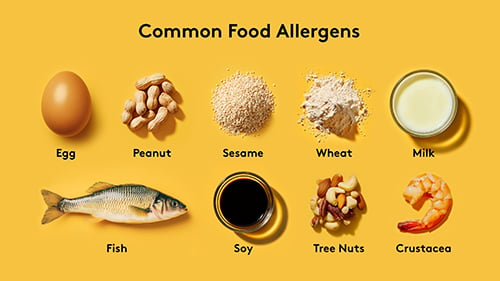
Talk to your baby's healthcare provider if your baby has a food allergy or if you are unsure whether these foods are appropriate.
Ideas for Safely Introducing Common Allergens
- You can introduce common allergens by choosing jarred or other ready-to-eat baby foods that contain ingredients such as peanuts, eggs, wheat, or fish.
- To introduce peanut-containing foods, mix 2 teaspoons of peanut powder into a smooth baby food, such as banana puree. You can also offer peanut puffs that dissolve easily in the mouth.
- To introduce wheat, try whole wheat infant cereal.
- If your baby is older than 10 months, you can offer scrambled eggs or small pieces of flaky fish that are prepared in a texture that is safe for your baby.
Introducing New Foods
- Offer 1 new “single-ingredient” food at a time.
- Wait 2 to 3 days before introducing another food.
- This makes it easier to identify and food allergies or intolerances.
Call your baby’s healthcare provider if they have:
- Rash
- Hives
- Vomiting
- Diarrhea
- Coughing
If your baby has trouble breathing, severe swelling, or becomes very sleepy or difficult to wake, then it is an emergency. Get medical help right away and call 911.
Supplements
Talk with your baby’s healthcare provider or registered dietitian to make sure your baby is getting enough vitamin D, iron, and other important nutrients.
Vitamin D
Vitamin D helps build strong bones and teeth and helps prevent a bone condition called rickets.
- All babies who receive breastmilk should get 10 micrograms (400 International Units) of Vitamin D each day, starting within the first few days of life for as long as they are given breastmilk.
- Iron-fortified infant formula does not have enough vitamin D if your baby gets less than 33 ounces each day. Babies who do not get enough formula should be given 10 micrograms (400 IU) of Vitamin D daily.
Iron
Iron is important for healthy growth and brain development.
- Babies who are breastfed usually have enough stored iron in their body until they are 4 to 6 months old. Talk with your baby's healthcare provider about if your baby needs an iron supplement at this age.
- Iron-fortified infant formula, along with solid foods, usually provides enough iron for babies fed formula.
Draft Number: 1593Revision Date: August 31, 2026