
Dental Sealants
What Are Sealants?
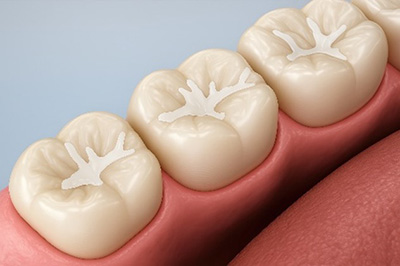
Sealants are thin, protective coatings. They are applied to the chewing surfaces of the teeth in the back of the mouth. These teeth are called molars.
Why Are Sealants Important?
Molars have deep grooves that are too small for a toothbrush to clean well. As a result, food and bacteria can get trapped in these deep grooves and over time break down the tooth’s outer layer. This can cause tooth decay or caries. Dental caries are also called cavities. This may result in the need for a filling. To prevent this, sealants are applied to the tooth to fill these deep grooves. The sealant hardens and creates a smooth surface which keeps food and bacteria out. This protects the tooth against cavities.
When Should Your Child Have Sealants?
Sealants are often applied when a child’s:
- First adult molars come in. This happens around 6 years of age.
- Second adult molars come in. This happens around 12 years of age.
Sealants need to be applied before a cavity develops. If your child has a cavity, more treatment may be needed first. Depending on your child’s cavity risk, sealants may be applied to baby teeth or other teeth besides molars.
Placing a Sealant Is Quick and Painless. Here Are the Steps:
- The tooth is cleaned and dried.
- A cleaning gel is applied for a few seconds and rinsed away. This helps to prepare the tooth’s surface.
- The tooth is dried again. It is important for the tooth to stay clean and dry while the sealant is being applied.
- The dental provider paints on special glue. This helps the sealant material stick to the tooth.
- The sealant material is then painted onto the tooth. A special light is used to harden the sealant material. This makes it safe for chewing.
- The sealant is checked to make sure it is properly in place.
- Your child can eat and drink right away after the sealant is applied.
How Long Do Sealants Last?
Sealants may last for years but may wear down or chip over time. Your child’s dental provider will check them at regular visits and reapply as needed.
If you have any questions about sealants, please ask your child’s dental provider.
To learn more about sealants, watch this video from Children’s Wisconsin.

Draft Number: 1803Revision Date: February 1, 2026