
Continuous Glucose Monitors
What is a Continuous Glucose Monitor (CGM)?
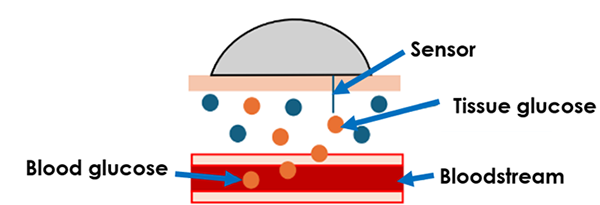
A CGM uses a small sensor inserted into the skin to check glucose levels in tissue fluid. It sends the glucose level to a reader, phone or insulin pump. This means fewer pokes, but not zero. You need to double check the CGM to double check treatment. You also need to do finger pokes while the CGM is warming up. This is often 30 to 60 minutes after you insert it.
What Are the Differences Between a CGM and Glucose Meter Checks?
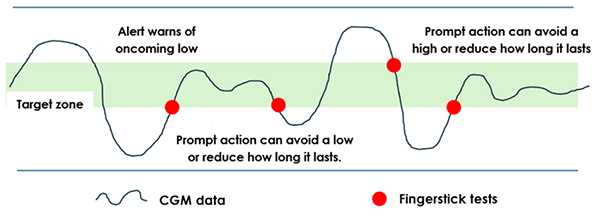
A glucose meter check is the most accurate number, but a CGM value is often close enough to be used for dosing. Finger pokes will give you moments in time. CGM values can show a trend over time and provide an arrow to show which direction the glucose is headed.
In times of a rapidly rising or falling blood glucose, the CGM value will be delayed. If symptoms don’t match the CGM value, always double check with a finger poke.
- If blood glucose is rapidly rising, CGM will look lower than the blood glucose actually is.
- If blood glucose is rapidly falling, CGM will look higher than the blood glucose actually is.
How Can You Get a CGM?
First, you need to find out if it is a prescription benefit or a medical benefit.
- Call your insurance company. You can find the number on the back of your child’s insurance card. If you need help calling your insurance company, let the Diabetes clinic know.
- Ask these questions:
- “Which CGMs are covered with my insurance plan?”
- “Is this covered under medical benefits or pharmacy benefits?”
- If medical, “Which durable medical equipment (DME) company is this insurance contracted with?”
If the CGM is covered as a pharmacy benefit:
- A prescription can be sent to the Skywalk Pharmacy or your preferred pharmacy.
- Some insurances also need prior authorization. This means that the insurance company will look at your child’s medical history to see if they will pay for part of the CGM.
- This part of the process can take 1 to 2 weeks.
If the CGM is not covered as a pharmacy benefit, or if the pharmacy benefit costs too much:
- A DME supplier will work with your insurance.
- Paperwork for the DME may not be able to be completed until staff have enough data to fill it out.
Insurance Does Not Always Approve the CGM. The Process Is:
- Clinic gives insurance information to the DME company.
- The DME company may call you to confirm personal details.
- DME company sends a form to the clinic to fill out.
- Clinic sends the completed form to the DME company.
- DME company sends the form on to your insurance company.
- Your insurance company decides if they will pay for the CGM.
If insurance approves the CGM, you will get it and other supplies from the (DME) company.
Important Information about CGM
Plan for 4 to 8 weeks from the start of the process to your child getting the CGM. If you haven’t heard from the pharmacy or DME company, call the company for updates- not the clinic. They will have the most up-to-date information. Insurance companies may need to see records of blood sugar testing at least 4 times a day for a certain amount of time.
What Happens When Your Child Gets the CGM Device?
Call the Diabetes clinic to schedule a nurse visit to place the first CGM or you can start the CGM at home. The clinic can send you online resources to find the information you need for a home start.
Draft Number: 1436Revision Date: May 1, 2026