
Retinopathy of Prematurity
What is Retinopathy of Prematurity?
Retinopathy of Prematurity (ROP) is an eye problem that can happen in babies who are born too early. It affects a part of the eye called the retina. The retina helps the eye see by sending messages to the brain. When a baby is born early, the tiny blood vessels in the retina may not be fully grown. These blood vessels can also grow the wrong way, which can cause problems.
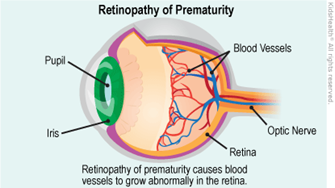
What Happens if ROP Gets Worse?
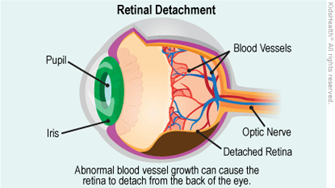
Most of the time, ROP goes away on its own and doesn't hurt the eye. If ROP gets worse there is a high risk that the retina can pull away from the back of the eye. This is called retinal detachment. It can cause your baby to lose vision for the rest of their life. Therefore, treatment may be recommended.
What Is the Treatment for ROP?
Your child’s eye doctor will decide which treatment to use. It is based on your baby’s eye exams. It is important to know that even with treatment, ROP can get worse. Your baby may still need special retina surgery.
There are 2 ways to treat severe ROP:
- Intravitreal treatment. The eye doctor places a small amount of medicine directly into the baby’s eye using a very thin needle. This medicine helps stop abnormal blood vessels from growing. This protects the retina and helps prevent vision loss.
- Laser treatment. A laser is used to treat the part of the retina that has not finished growing. The goal is to stop abnormal blood vessels from growing in those areas. This helps protect the baby’s vision.
Why Does My Baby Need Eye Exams?
The only way to find ROP is to look at the retina inside the eye with an eye exam. You cannot tell if your baby’s ROP is getting worse just by looking at them. An ophthalmologist or eye doctor will put special drops in your baby’s eyes. This makes the pupils bigger. This helps the doctor see the whole retina and the blood vessels. Using a lens and special tools, the doctor will check the blood vessels in your baby’s eyes. What the doctor sees will decide how often your baby needs more eye exams.
Follow up After Leaving the Hospital
ROP may still be there when your baby goes home. Your baby will need eye exams. These exams are usually done every 1 to 3 weeks. The timing of these exams is important because if the exam is late, treatment will also be late.
Being born early may lead to other vision problems. These issues can affect how well a child sees as they grow. Because of these risks, every baby born early should have long-term eye care from an eye doctor. It is very important to go to all follow-up visits after leaving the hospital.
- Lazy eye (amblyopia): One eye doesn’t see as well as the other because the brain favors the stronger eye.
- Crossed eyes or eye movement problems (strabismus): The eyes don’t line up or move together, and glasses may be needed at a young age.
- Cortical visual impairment (CVI): The eyes may be healthy, but the brain has trouble processing what the eyes see.
To learn more about ROP review this Kid’s Health resources
Watch this Children’s Wisconsin Video to learn more
© 2025 The Nemours Foundation/KidsHealth®. Used and adapted under license by Children’s Wisconsin. This information is for general use only. For specific medical advice or questions, consult your health care professional.
Draft Number: 2075Revision Date: April 1, 2026