
Retinopathy of Prematurity Treatment: Intravitreal Injection
The eye doctor will check your baby’s retinas at each exam to see whether the retinopathy of prematurity (ROP) is staying the same, getting better, or getting worse. If the ROP starts to worsen and the retina is at risk, the doctor may recommend intravitreal injection treatment to help stop abnormal blood vessels from growing.
What Is Intravitreal Injection Treatment?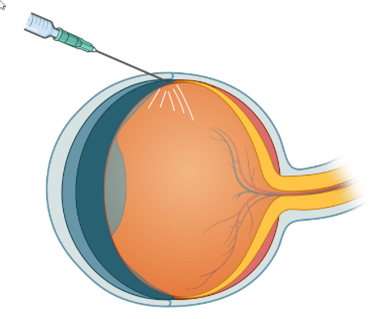
The eye doctor places a small amount of medicine directly into the baby’s eye using a very thin needle. This medicine helps stop abnormal blood vessels from growing. This protects the retina and helps prevent vision loss.
Before the procedure:
- Your baby will get eye drops to make the pupil larger and to numb the eye.
- They also receive medicine to help them relax.
During the procedure:
- The doctor uses a very small needle to place the medicine into the eye.
- The injection takes only a few seconds.
After the procedure:
- It is normal for the eyes to look a little red for a short time.
- Your baby will use eye drops to prevent infection. Follow the eye drop instructions.
- The doctor will check your baby’s eyes again in 1 to 2 days to make sure they are healing well.
Are There Side Effects?
Side effects from intravitreal injections in babies are rare, but they can happen. To watch for side effects, the eye doctor will do eye exams until the blood vessels are fully grown. If more treatment is needed, the doctor will talk about options with you.
Side effects can include:
- Infection
- Cataract (clouding of the eye’s lens)
- Crossed eyes (strabismus)
- Needing more treatment
- Glaucoma (high pressure in the eye)
- Swelling or inflammation
- Needing glasses
- ROP getting worse even after treatment
Image created in BioRender
Draft Number: 2076Revision Date: April 1, 2026