
Retinoblastoma: Intra-Vitreal Chemotherapy
For children with retinoblastoma, one way to destroy cancer cells is with intra-vitreal chemotherapy. The Retinoblastoma team may decide this is a treatment your child should receive.
What Is Intra-Vitreal Chemotherapy?
Intra-vitreal chemotherapy is when chemo is injected into the gel like space inside the eye. This gel like space is called the vitreous. The vitreous does not have any blood vessels. This chemo goes right to the tumor. This helps protect the rest of the body from the chemo.
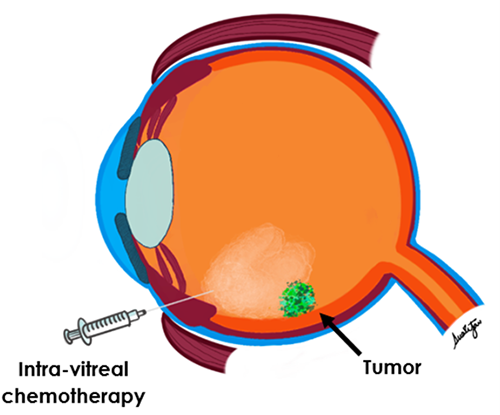
What Happens During This Procedure?
- It is done in the operating room while your child is asleep. Your child will be given medicine to help them be asleep.
- A small amount of chemo is put into the eye with a very small needle.
- A freezing treatment (called cryotherapy) is done after the needle is pulled out. This seals the spot where the needle went in. This helps stop any cancer cells from getting out of the eye.
Care for Your Child After the Procedure
Your child may have some mild pain. The provider may give your child medicine to help with pain. Your child may be given eye ointment to use. Use it as directed by your child’s provider. Your child may continue their normal activities when they feel well enough.
What Are Possible Side Effects of the Procedure?
- Cancer cells may get out of the eye and spread to other parts of the body. The risk is very small based on how the treatment is done.
- Damage to the retina. The smallest dose of chemo will be used to help destroy the cancer cells and not damage healthy cells.
- Infection
- Bleeding of the eye
Artwork 2025 by Suma Thareja
Draft Number: 2235