

25 Years of Project ADAM: Preparing Schools and Communities for Cardiac Emergencies
Three to five minutes. That window can mean the difference between survival and tragedy when sudden cardiac arrest strikes.
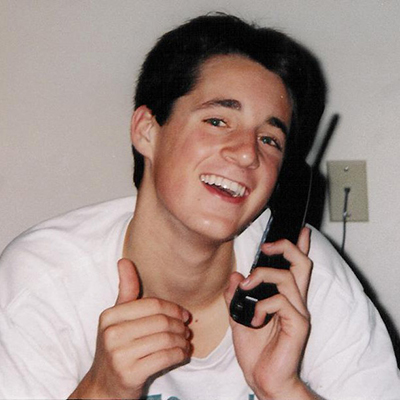
Adam Lemel, a gifted 17-year-old student-athlete, had everything going for him. He had big dreams of playing guard for Duke University. “He was going to do something great,” said Joe Lemel, Adam’s father.
But on a Friday night in January 1999, Adam collapsed during a basketball game. He suffered a sudden cardiac arrest. A witness quickly began CPR, but there was no automated external defibrillator (AED) on-site. During those agonizing minutes, Adam lost his life.
 “An AED is a device that can analyze a rhythm. By delivering a shock, it can reset the chaos in the heart and get it back to a normal rhythm,” said Anoop Singh, MB BCh, National and Wisconsin Medical Director for Project ADAM and Medical Director of Pediatric Cardiology at the Herma Heart Institute at Children’s Wisconsin. “The longer cardiac arrest persists, the more damage is done to the body, and it becomes harder to get someone back to a normal rhythm.”
With a cardiac emergency response plan, quick CPR and the use of an AED within three to five minutes, sudden cardiac arrest can be a survivable event.
Turning Unimaginable Loss Into Life-Saving Action
In the months after Adam’s passing, the Lemel family found a way to turn their grief into meaningful action. They hoped to spare other families from similar heartbreak. Together with Children’s Wisconsin and the Herma Heart Institute, they launched Project ADAM (Automated Defibrillators in Adam’s Memory). Named in Adam’s honor, Project ADAM brings cardiac emergency readiness to schools and community sites across the nation.
From Grassroots Beginnings to a National Movement
In the early years, Project ADAM focused on ensuring schools had AEDs on-site. Over time, leaders found that equipment alone wasn’t enough. Schools needed a clear, sustainable plan for sudden cardiac arrest. One that would be easy for anyone to follow at any time.
“Almost everything that determines a child’s outcome happens before they reach the hospital,” said Dr. Singh. “Recognition, CPR and timely defibrillation are what save lives.”
That insight led to the Heart Safe School model. With guidance from Project ADAM, schools create and adopt a cardiac emergency response plan (CERP). This plan includes awareness efforts, training and a plan they can activate right away.
What Is a Heart Safe School?
At a high level, Heart Safe Schools meet these criteria to respond to a sudden cardiac emergency:
1. Recognize: Train a team to know the signs of sudden cardiac arrest.
2. Activate: Create a written plan and assign a cardiac emergency response team to activate in an emergency.
3. Educate: Learn and practice hands-only CPR and run regular drills.
4. Access: Ensure AEDs are available, accessible and that people know where to find them.
5. Contact: Know how to contact EMS and provide clear directions to the correct location.
When a school meets all criteria, it receives a Heart Safe School designation to recognize its efforts. A Project ADAM Coordinator can also assist with providing guidance and resources as a school works on its plan, training and drills.
Expansion and Community Engagement
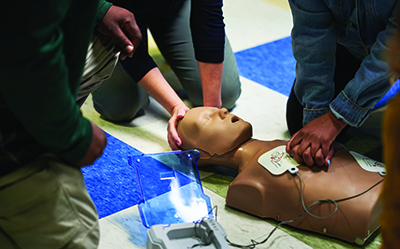 This repeatable framework has enabled Project ADAM to reach thousands of schools nationwide. In 2016, Project ADAM had 11 affiliates in various states. Today, it has grown to include more than 50 affiliates across 35 states, each leading Heart Safe efforts in their regions.
“If we knocked on their doors, most schools would have AEDs. Most would have someone trained to recognize sudden cardiac arrest,” said Alli Thompson, National and Wisconsin Administrator for Project ADAM. “But where we come in is helping them run the drills and really piece it all together.”
The core focus is on schools, but affiliates now share adapted tools with community sites and youth sports programs, where students spend time after school. “Sharing the program protocol with the after-school activities is key,” said Alli. “That's where we hear a lot of incidents happening — in the gym, on the field, in those immediate areas right outside the school.”
25 Years of Honoring Adam and Saving Lives
Project ADAM held its first national in-person meeting back in 2016. Joe recalls sitting in a small auditorium, looking around and thinking, “Oh my goodness, we’ve done it.” What began as a grassroots effort to prevent sudden cardiac death had transformed into a national movement.
A decade later, that movement has grown exponentially. In September 2025, Children’s Wisconsin and the Herma Heart Institute held the National Project ADAM Conference. This event marked Project ADAM’s 25th anniversary.
Medical leaders, coordinators, affiliates and families impacted by sudden cardiac arrest attended the conference. They recognized the program's progress since its humble beginnings around a small conference table back in 1999. Founding members shared the obstacles they had faced and overcome. Attendees celebrated the profound impact Project ADAM has had across the United States — having helped save more than 250 lives, a figure leaders say is a conservative estimate.
Reflecting on how far Project ADAM has come, Joe expressed his hope for future legislation requiring schools to implement a CERP. “I would love to live long enough to see the program grow to a point where I’m not needed,” he said.
He also highlighted the strong sense of community among affiliates across the states. They rally around each other, sharing solutions and refining ideas to ensure everyone benefits from the group’s collective knowledge. “You don’t have to reinvent the wheel anymore,” he said.
Is Your Child’s School Heart Safe?
Thousands of students, staff and community members are safer today because of Project ADAM. The next life saved could be in your school or community.
Email Project ADAM to see if your school is Heart Safe. If not, encourage your principal or school nurse to connect with our local Project ADAM team.
“As a society, we need to understand that we all need to be able to respond in an emergency,” said Dr. Singh. “If it's somebody you care about and it happened in front of you, you would want to give them the best chance for survival.”
Children's Wisconsin Resources

Written by
Writer
Related Stories
No related articles found.