

A Midwest Connection: Lucas’ Journey from Crisis to Triumph
Lucas Menke has never been one to shy away from adventure. Born on New Year’s Day 2015, he was Wisconsin’s very first baby of the year. He has spent the past decade exploring the outdoors, playing sports and tackling challenges head-on.
Every summer, his family takes a road trip to different places around the United States to catch a Brewers game and do some exploring. But in the summer of 2024, their road trip took an unexpected turn. During a family vacation in Colorado, Lucas’ adventurous spirit collided with something no one saw coming.
An Adventure Takes a Turn
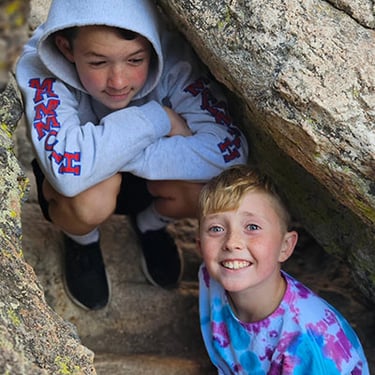 On July 4, 2024, the final day of their vacation, the Menke family decided to do a ropes course in Estes Park, Colorado, before the fireworks that night. However, while on the course, Lucas began to feel unwell, experiencing sudden nausea and stomach pain.
Shortly after he started to feel ill, the family returned to their vacation rental, allowing Lucas to rest. But it quickly became clear that his stomach pain was more than an ache or a virus. His parents, Kristy and Adam, wondered if it was his appendix. So, they rushed to a local emergency room, where Lucas underwent an ultrasound and blood work.
Doctors weren’t sure at that point what was causing Lucas’ pain, but his labs showed a high white blood cell count. They did a CT scan to investigate further.
What came next was something alarming for any parent. “After the CT, they just came in and were like, ‘We have a helicopter en route. Your son has internal bleeding of his bowels, and he's getting a helicopter,’” said Kristy.
The small hospital was not equipped to treat a child with internal bleeding, so Lucas was airlifted to Children's Hospital Colorado in Denver.
While on the helipad in Denver, Lucas was able to catch the fireworks for a few minutes, an experience he would later tell his friends was the best part of his summer.
Meanwhile, the Menke family rushed to pack up and drove for nearly two hours to Denver. "We just shoved everything in our car and drove down there,” said Kristy.
A Rare Pediatric Diagnosis
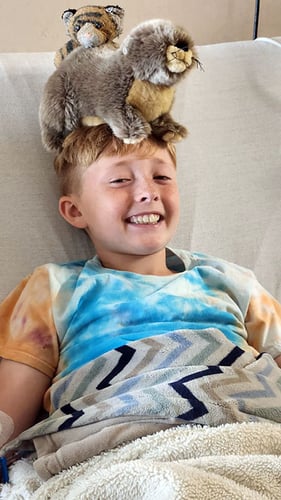 The next day, Lucas underwent an MRI. Doctors needed to examine his abdominal organs and blood vessels more closely. They weren’t convinced he had bleeding in his bowels. The MRI would help confirm the source of the issue.
The MRI revealed that Lucas had a rare pancreatic injury — a pancreatic duct disruption. The duct within the pancreas had a tear. And what was initially thought to be bleeding turned out to be a leak of pancreatic fluid.
These injuries are rare in kids. They usually happen from high-impact trauma, such as a car crash, bike accident or sports injury. Lucas had a minor fall while hiking the day prior, but it was on the opposite side of his pain. Kristy wondered if the ropes course harness had caused the injury to his pancreas.
Regardless of the cause, the situation was dire. Lucas faced the possibility of extensive surgery, which could change his life forever.
Additionally, Lucas had developed pancreatitis, inflammation of the pancreas caused by an injury. Pancreatitis also increases a person’s risk of developing diabetes.
A Glimmer of Hope
Luckily, Robert Kramer, MD, a Pediatric Gastroenterologist at Children's Hospital Colorado, stepped in. At this point, the extent of Lucas’ pancreatic injury was unclear. So, he proposed a minimally invasive procedure called an endoscopic retrograde cholangiopancreatography (ERCP).
ERCP combines upper GI endoscopy and X-ray. It is a highly specialized procedure — particularly in kids — with only about 30 pediatricians in the country trained to perform it.
During this procedure, a doctor inserts a flexible tube with a camera into the patient’s mouth and down the esophagus. The tube extends past the stomach and into the small intestine, where the pancreatic and liver drainage pipes connect, allowing the flow of bile and pancreatic juices. The doctor can inject a special dye that shows up on the live images. This allows them to see if the tubes are open and working properly, or if there’s a blockage or leak. In some cases, the doctor can fix problems during the same procedure, like placing a tiny stent to keep things flowing.
A Midwest Connection
 When Dr. Kramer learned the family was from Wisconsin, he asked where exactly. When they said a suburb of Milwaukee, Dr. Kramer was thrilled. That’s when he told the family about Diana Lerner, MD, a Pediatric Gastroenterologist at Children's Wisconsin.
Physicians like Dr. Lerner are transforming pediatric care. In 2023, she received the Vitality Award for an educational sabbatical from the Medical College of Wisconsin. During that time, she was accepted into a yearlong GI fellowship program at the University of Colorado Anschutz Medical Center, where she trained alongside world-class experts and completed more than 1,200 advanced endoscopic procedures. Upon completion, Dr. Lerner returned to Children’s Wisconsin and introduced the ERCP procedure to her colleagues in the Gastroenterology, Liver and Nutrition Program.
“My goal as a doctor has been to ensure children in Wisconsin have access to the most innovative and minimally invasive procedures," said Dr. Lerner, who is also a Professor of pediatric gastroenterology at the Medical College of Wisconsin, the academic partner of Children's Wisconsin. "This mission has informed the trajectory of my career."
Everything Falls Into Place
For Lucas, the goal was to place a stent to allow the fluid to flow out of the pancreas and into the intestine, where it's supposed to go. This would allow them to save Lucas’ pancreas from inflammation, scarring and damage — ultimately, fixing the leak. And if that were possible, over time, it would likely heal.
ERCP offered hope for Lucas. It could help him avoid major surgery that would involve removing part of his pancreas, bringing lifelong health issues.
“They didn't know if it was going to work or not,” said Kristy. “But they said it's worth a try, because the alternative is life-changing — to have your pancreas removed.”
The procedure took about an hour. Dr. Kramer immediately greeted the family with good news. The procedure was successful, and Lucas’ condition had stabilized. He confirmed that pancreatic fluid was no longer leaking.
After staying in the hospital for a few days for monitoring, the family was able to return to Wisconsin with a treatment plan and next steps in place. In about two months, Lucas would need to undergo another ERCP procedure to check his healing and determine if a new stent needed to be placed. But thanks to Dr. Lerner’s recent training, she could monitor and manage Lucas’ condition at Children’s Wisconsin going forward.
Managing Care Close to Home
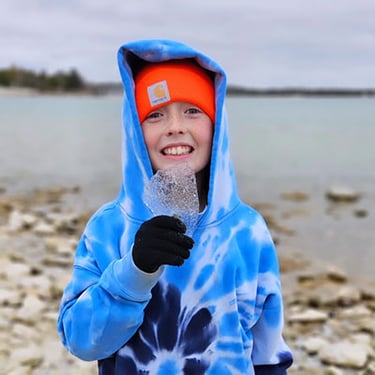 The remainder of the summer was filled with cautious optimism and a strict regimen to ensure Lucas' recovery. He was still experiencing a good deal of pain, a result of the pancreatic fluid that had leaked into his abdomen. It would take time to make its way out of his body and for the pain to ease.
Lucas had to limit his physical activities. He was unable to play sports, ride his bike or take part in any activities where he could fall or get hit in the stomach. But the family managed to find joy in simple pleasures. They walked, swam, kayaked and played video games together as they awaited the follow-up procedure.
In August, the Menke family met with Dr. Lerner at Children’s Wisconsin. She explained everything to ensure they were comfortable with the upcoming ERCP procedure in September. During the procedure, Dr. Lerner would remove the existing stent. She would then conduct a contrast study, and if the pancreas had not healed yet, she would place a new stent.
“She was lovely to work with and so great at explaining everything, just taking her time and easing our worries,” said Kristy. “I never felt like I was asking too many questions. I immediately felt at ease with her.”
If the stent needed a replacement, Lucas’ healing journey would continue into the school year. As would his limitations.
“You can't keep that stent in for a long time, so it had to be removed no matter what,” said Kristy. “It was either removal or removal and replacement. We didn't know. And we didn’t know if Lucas was going to need even more bed rest after that.”
From Worst-Case To Best-Case Scenario
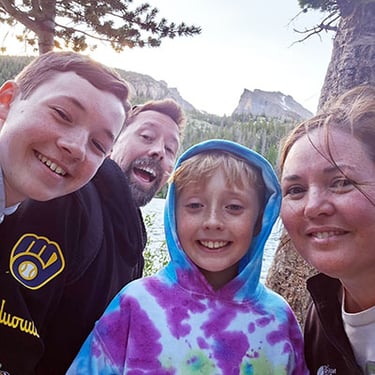 In September, Lucas underwent the ERCP procedure again to determine progress, this time with Dr. Lerner. During the procedure, Dr. Lerner was able to remove the stent and see that Lucas’ pancreas had healed.
This was the news Lucas and his family had been waiting for. Lucas could now resume his active lifestyle and get back to being an adventurous kid without limitations. Kristy said Lucas is doing great today.
Kristy said that when she tells people this story, the word "serendipity" often comes up. She feels it too.
“He was the first kid at Children's Wisconsin to have the ERCP procedure,” said Kristy. “We didn’t have to leave our hometown because someone here was just trained. And now she can do this for other children. It's wonderful.”
Children’s Wisconsin is one of the few medical facilities with physicians who have ERCP training and the equipment to perform such procedures.
“I think that was probably the most rewarding thing for me,” said Dr. Lerner. “To have brought this here and to have it at Children's Wisconsin, which is already just an incredible institution.”
Since Lucas, Dr. Lerner has completed more than 45 ERCP and endoscopic ultrasound procedures at Children’s Wisconsin. Because of her work, kids are receiving more accurate diagnoses and less invasive procedures. This is also leading to quicker recoveries and life-changing outcomes.
“We're just so happy he's healthy. I keep thinking that a worst-case scenario ended up being a best-case scenario,” said Kristy. “Everything just aligned perfectly. And they said he can live his life like it never happened.”
Children's Wisconsin Resources

Written by
Writer
Related Stories
No related articles found.