

After being cooped up for six grueling winter months, kids are finally free to go outside and enjoy summer. While there are many fun, family activities to enjoy throughout the city and state, there is one pest to be aware of — ticks.
Unfortunately, these pesky bugs can be just as big a part of summer as barbecues and baseball. According to the Wisconsin Department of Health Services, “Wisconsin had 6,469 cases of Lyme disease in 2024, the highest on record.” In fact, the number of Lyme disease cases in the state have quadrupled over the past two decades. Additionally, so far in 2026, tick-related emergency room visits have increased dramatically from last year.
The good news is awareness goes a long way, and the best treatment is prevention.
What Is Lyme Disease?
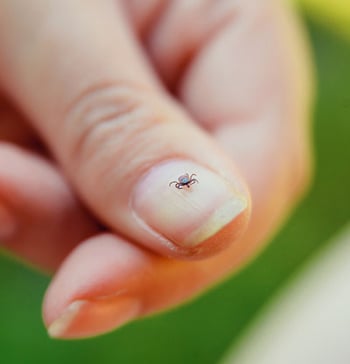 Lyme disease is a bacterial infection that is transmitted through bites from deer ticks. In the majority of cases, the telltale sign of Lyme disease is a bulls-eye rash — a central, circular red spot surrounded by one or more red circles. Other symptoms include fever, chills, headache, fatigue, and muscle and joint pain (similar to early flu symptoms). Lyme disease could also include pain or numbness in the joints and extremities, paralysis of the facial muscles, irregular heartbeat and inflammation of the brain and spinal cord.
When To Go to the Doctor
While most tick bites will end up being completely harmless, it’s important to know when medical attention may be necessary. If your child recently spent time outside and is experiencing any of the above symptoms, call your child’s pediatrician. If a diagnosis is confirmed, a 10-21 day course of antibiotics may be needed.
The DEETs on Bug Spray
The first step everyone should take against bugs is insect repellent. You should apply an insect repellent to you and your family anytime you’re going to be spending prolonged time outdoors. Look for products that contain DEET, picaridin or oil of lemon eucalyptus (do not use on children younger than 3 years of age). These ingredients are effective against ticks and other biting insects like mosquitoes and flies (but not stinging insects like bees or hornets). Also, try to use lotions or pump sprays — avoid aerosol sprays as they increase the risk of inhaling chemicals.
While DEET is a highly effective insect repellent, it’s important to follow the directions carefully. While most parents will often reach for the product with the highest percentage of DEET, the higher percentage actually refers to the length of protection not the overall effectiveness. The American Academy of Pediatrics (AAP) recommends that repellents used on children contain no more than 30% DEET and that no insect repellents be used on children under 2 months of age.
While repellents with sunscreen seem like a convenient solution, it’s best to apply each separately. Sunscreen needs to be reapplied much more frequently than insect repellents — every few hours, typically — and you don’t want to risk overexposing your child to repellent chemicals. For most insect repellents it’s recommended you apply them to your child only once a day.
Other Alternatives
In addition to bug spray, there are many other precautions you can take to help safeguard against ticks. When venturing out into the woods, be sure to stay on the central paths and avoid the heavily wooded and brushy areas with long grass where ticks like to hide.
When it comes to clothing, long-sleeved shirts, pants and closed-toed shoes provide the best protection. If playing or hiking in an area with long grass, it’s a good idea to go the extra step and tuck your child’s pant legs into their socks. Light colored clothing also help you see ticks more easily and if your child has long hair be sure to pull it back.
Perhaps most important of all, when the day is done, carefully inspect you and your children for any ticks — giving kids a bath is a good way to do a thorough inspection. Pay particular attention to the hairline, around the ears, inside the belly button and between their legs. The quicker you find them, the more effectively they can be treated. Typically, a tick must be attached for 36 to 48 hours to transmit Lyme disease.
How To Remove a Tick
If you find a tick, use a tweezers to gently remove it. Holding the tweezers sideways, grasp the tick as close to the surface of the skin as possible, then pull upward in a gentle, straight motion. Try to remove it carefully without twisting, as twisting may cause parts of the tick to break off and remain in the skin.
After the tick is completely removed, wash the area with warm soapy water. It’s also a good idea to store the tick in a plastic bag in case you need to show it to your child’s doctor later.
One myth to ignore: A lot of parents were taught as a kid to burn off a tick with a match. DO NOT do this. Burning, smothering or using chemicals on a tick is outdated advice and can actually make things worse because they allow the tick to stay stuck in the skin longer.
This all may seem like a lot to remember whenever you just want to go for a hike or play in the park. But awareness is important. And with a few simple safety precautions, you and your family can soak up every last second of summer fun.
If your child has a tick bite or you have concerns about a tick bite, we are here to help. Click here to schedule an appointment.
Children's Wisconsin Resources

Related Stories
No related articles found.