

Splash Into Safety: How To Pick the Perfect Personal Flotation Device for Your Child
There’s almost nothing better than spending a hot Wisconsin summer day on the water. However, whether you’re at a pool, lake or ocean, drowning can happen anywhere. Follow these tips and tricks to keep your whole family safe this summer.
What Can Be Used as a Life Jacket?
 To start, federal law requires children under the age of 13 to wear a life jacket while underway in an open vessel on federally controlled waters. That means a well-fitting, U.S. Coast Guard approved life jacket, not air-filled toys (such as water wings) or pool noodles for flotation assistance. Check the fit of the jacket. Make sure it’s not too big or too small and worn comfortably with all the straps — we’ll go into greater detail a little later.
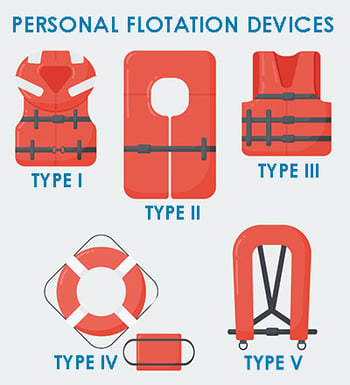
Did you know there are actually five different types of life jackets?
- Type I: Off-shore. Floats best and is designed to turn an unconscious person from face down to face up position. It also has the greatest neck support.
- Type II: Near-shore. Floats well and can turn an unconscious person into a breathing position, but is less effective in its neck support compared to Type I.
- Type III: Flotation aid. Designed for conscious users in calm water. These are built for those comfortable in water and can even be used in water sports such as tubing and water skiing.
- Type IV: Throwable device. These are typically a cushion or a ring and not meant to be worn. These types of flotation devices are designed to be thrown and/or held until the person is rescued.
- Type V: Special use. These are designed for specific activities like whitewater rafting or windsurfing.
How Do I Fit My Child for a Life Jacket?
Read the label. Check to see if the life jacket is U.S. Coast Guard approved and check to make sure it is appropriate for water conditions and your child’s weight.
Sizing:
- Infant: 8-30 pounds
- Child: 30-50 pounds
- Youth: 50-90 pounds
Make sure to complete the “fit test” to ensure your child’s life jacket fits correctly. Fasten all straps, buckles and/or zippers to make it nice and snug. Next, lift up the shoulders of the life jacket. If the jacket hits your child’s chin or ears, it may be too big or loose.
Visit the U.S. Coast Guard site to learn more about life jacket fitting.
What About Puddle Jumpers?
While Puddle Jumpers make swimming comfortable and easy for kids — and are U.S. Coast Guard approved — parents should be aware of some of the threats they could potentially cause.
Puddle jumpers can cause a certain false confidence for children when they are around or near water. They can also lead to dependence on swimming in a vertical motion and discourages children to use their arms in the water.
Puddle jumpers are classified as a Type III flotation device, meaning that they should only be used in calm water. For the sake of safety in lakes, rivers and oceans, puddle jumpers are not recommended.
Flotation devices such as water wings, pool noodles or inflatable devices should not be used as a personal flotation device. Use U.S. Coast Guard approved flotation devices only.
Other Swimming Safety Tips
- Always stay within arm’s reach of children under 5 years old or always stay near your child if they are not a strong swimmer.
- Learn CPR.
- Always have a designated adult to watch children — we like to call these “water watchers.”
- Children’s Wisconsin Swimming and Water Safety tip sheet.
Children's Wisconsin Resources

Related Stories
No related articles found.