
Signs and Symptoms of Asthma Attack
What Is an Asthma Attack?
An asthma flare-up (attack) is when signs of asthma get worse.
Signs and Symptoms of an Asthma Attack
There are early signs and emergency signs of an asthma attack. Follow your Asthma Management Plan for which medicines to use. If medicine is not started, the asthma attack could get worse.
If symptoms do not get better or you are still having severe symptoms, call your provider, go to Urgent Care or the Emergency Department or call 9-1-1. You may need other medicines that you do not have at home to get better.
Early Signs
It is important to start quick relief (rescue) medicine or SMART medicine as soon as these early signs begin:
- Coughing
- Wheezing
- Tight or heavy chest
- Coughing at night
- Playing less
Emergency Signs
Call your provider or be seen right away if you have any of these emergency signs:
- Rescue medicine is not working.
- Breathing is getting harder or faster and keeps getting worse.
- Coughing without stopping.
- Trouble breathing while walking, talking, or sleeping.
Emergency Signs
Physical
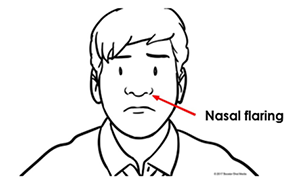
- The nose is opening wider to get more air in. This is called nasal flaring.
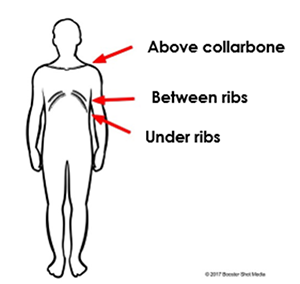
- The skin between the ribs or under the neck is pulling in during breathing. This is called retractions.
- Lips or fingernails start to turn blue.
Why Do Asthma Attacks Happen?
Often something triggers an asthma attack, such as:
- Rescue medicine is not working
- Colds
- Allergies
- Cigarette smoke
- Exercise
- Something around you (cleaners, animals, dust, mold, or weather changes)

What Happens During an Asthma Attack?
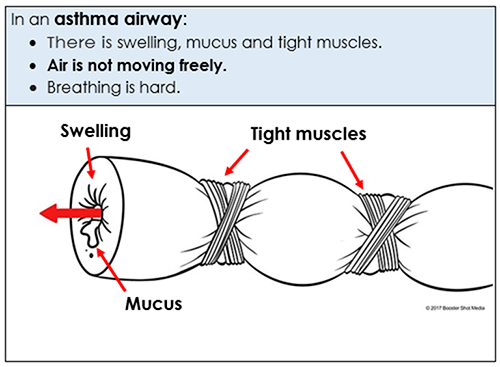
When asthma is not under good control, there are 3 changes in the airways that make it hard to breathe. All of these make the airways smaller. When the airways get smaller it is hard to get air in and out. This can cause wheezing, coughing and trouble breathing.
Treatment of an Asthma Attack
- Use your quick relief (rescue) medicine.
- Follow your Asthma Management Plan.
Listed Below Are the 3 Ways the Airways Change When Asthma Is Not Under Good Control:
- Muscles tighten around the airway. Your airways have muscles around them that are usually loose. When you have asthma, these muscles can tighten.
- Inflammation (swelling) inside the airways. The walls thicken and make the space in the airways smaller.
- Mucus plugs up the airway. Mucus is a thick liquid. Mucus normally protects the nose, throat, and airways. This mucus can plug the airways.
To Learn More, Watch These Videos:
Artwork@2019 Booster Shot Media Inc.
Draft Number: 1885