
Gvoke HypoPen Glucagon For Very Low Blood Sugar
Gvoke is a medicine used in an emergency when your child has very low blood sugar. Learn more about how and when to use this medicine.
Print:
What is the Gvoke HypoPen?
Gvoke HypoPen is a medicine used in an emergency. It is given as a shot into the fatty tissue under the skin. It is used when your child has very low blood sugar, and they aren’t able to safely eat or drink. It helps raise blood sugar by releasing stored sugar into the blood. This medicine is only for children aged 2 years and older. If your child is less than 2 years old, they will use a different product.
When Do I Need to Use it?
Use it if your child has signs of very low blood sugar.
These include:
- Cannot safely eat or drink (may choke).
- Has a seizure.
- Passes out or cannot be woken up.
What Are the Most Common Side Effects?
- Upset stomach or throwing up.
- Headache.
- Swelling where the shot was given.
What Should I Know About Gvoke HypoPen?
- Make sure your child always keeps their Gvoke HypoPen with them at all times.
- Each pen can be used one time only.
- Gvoke HypoPen comes in 2 different doses:
- Less than 100 pounds: 0.5mg
- More than 100 pounds: 1.0mg
- The Gvoke HypoPen comes with 2 sealed foil pouches.
- Keep it in the sealed pouch until you are ready to use it.
- Store the Gvoke HypoPen at room temperature (68˚ F and 77˚ F)
- Do not put it in the refrigerator.
- Do not leave it in the car.
- Do not expose it to very cold or very hot temperatures.
- If you need more pens, talk to your provider.
Teach your family, friends, and other caregivers how to use the Gvoke HypoPen. They should know how to use it before it is needed.
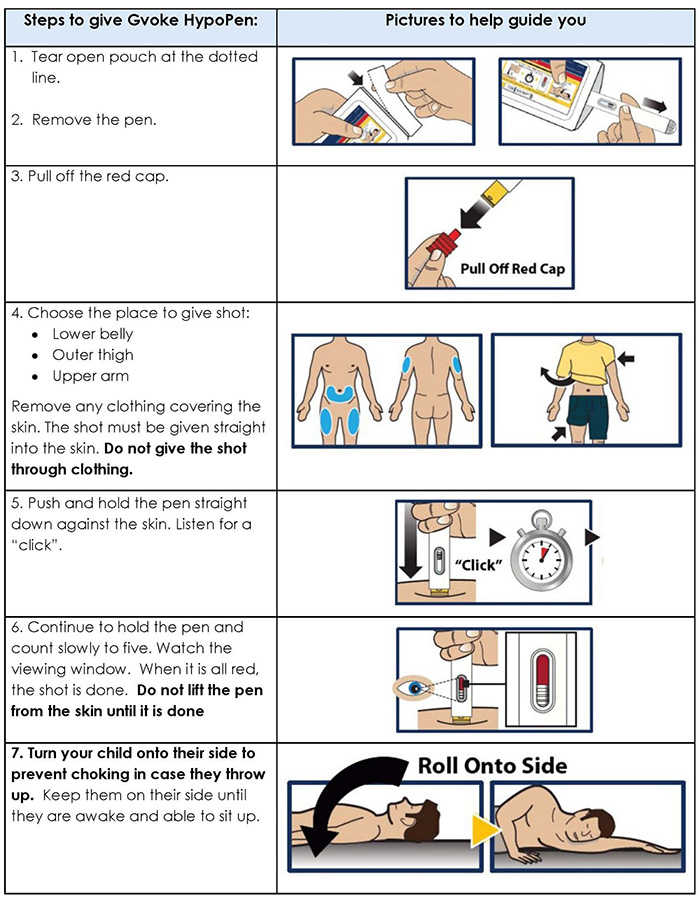
How Do I Give Gvoke HypoPen to My Child?
It is an emergency when your child has very low blood sugar.
- If you are alone, do not leave your child. Use the Gvoke HypoPen. Then call 911.
- Gvoke HypoPen can cause nausea and vomiting.
- Roll your child on their side after giving Gvoke HypoPen.
- This will prevent choking if they throw up.
- If your child is throwing up, keep them on their side until they are alert and able to swallow.
- If you are with others, have someone call 911 while you give your child the medicine.
Draft Number: 1560Revision Date: July 14, 2026
This content was created to help you care for your child and/or family member. It does not take the place of medical care. Talk with your healthcare provider for diagnosis, treatment and follow-up.