
Mild Traumatic Brain Injury (Concussion)
A mild traumatic brain injury, or concussion, is a brain injury caused by a bump or blow to your child's head. Learn more about the signs and how it is treated.
Print:
What Is a Mild Traumatic Brain Injury (Concussion)?
- It is a brain injury caused by a bump or blow to the head.
- This is not the kind of injury that can be seen on an MRI or CT scan.
- Often, the person “looks” fine, but still has problems with everyday tasks.
What Symptoms Are Common After a Concussion?
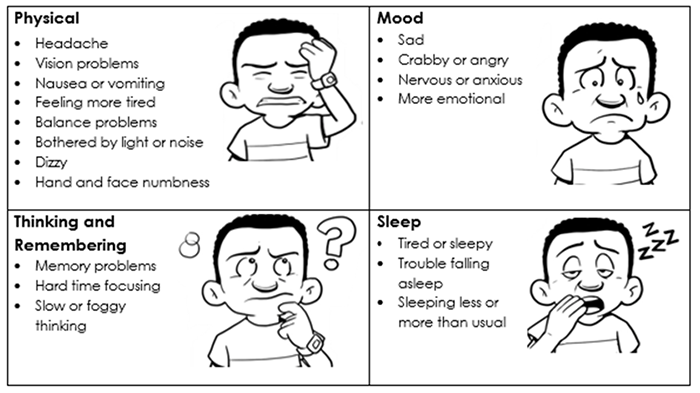
When Should I Go Back to the Emergency Department?
If your child does not respond or will not wake up, call 911 right away. Go to the Emergency Department (ED) right away if any of these symptoms start:
- Very bad headaches that get worse
- So sleepy they will not wake up
- Weak or numb arms or legs
- Throwing up without stopping
- Does not recognize people or places
- Seizures
- Unable to walk or move
- New and very bad neck pain
- Strange or bizarre behavior
- Does not respond like normal
- Slurred speech
Tell the ED staff that your child has had a recent head injury.
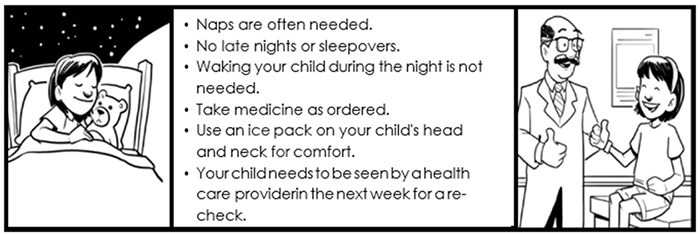
How Are Concussions Treated?
Rest and sleep are the most important ways to get better.
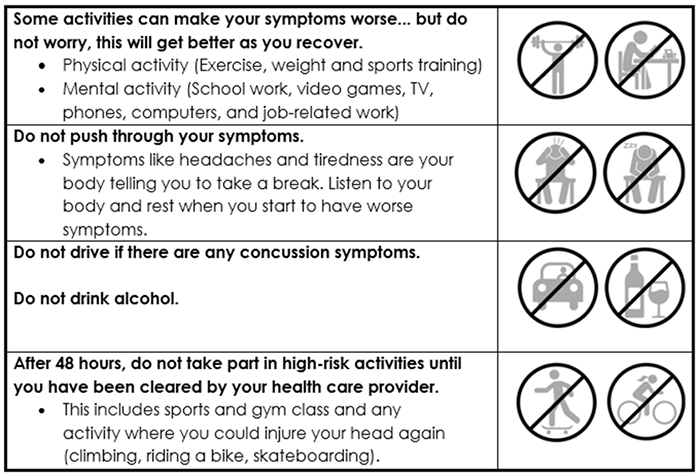
Are There Things My Child Should Not Do?
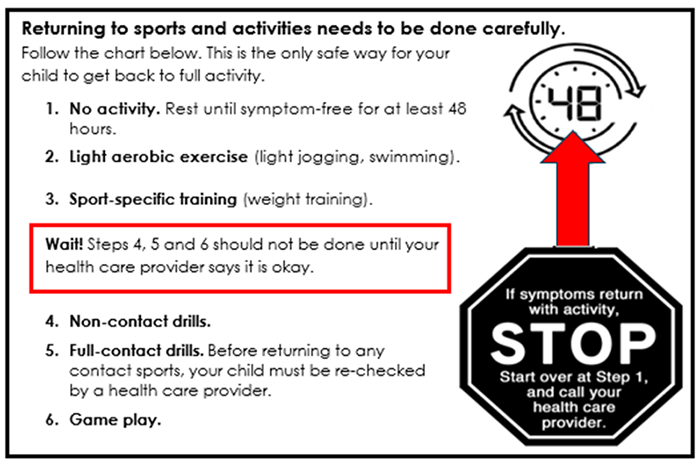
For the first 48 hours, do not take part in any physical and mental activity.
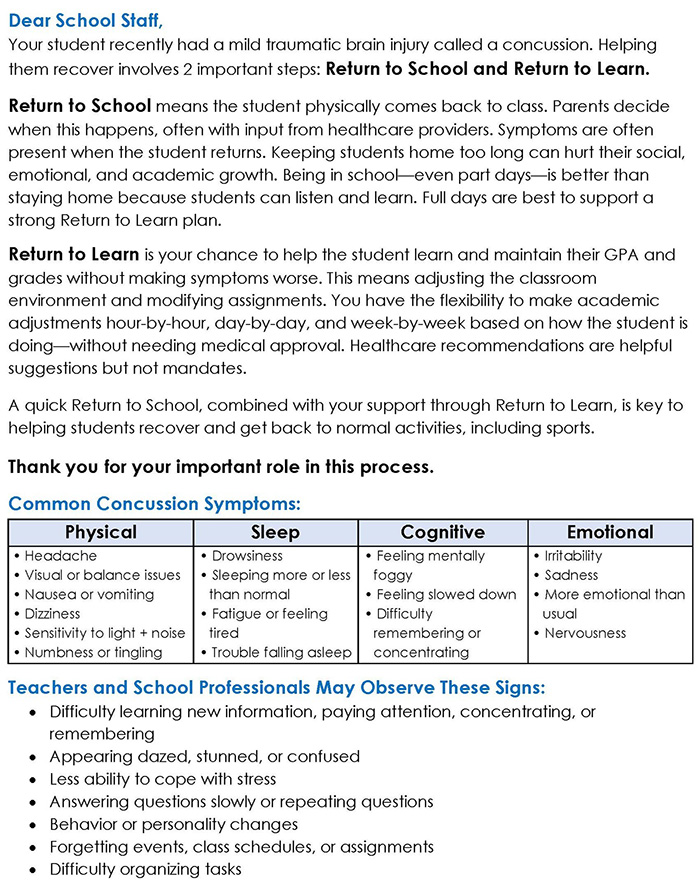
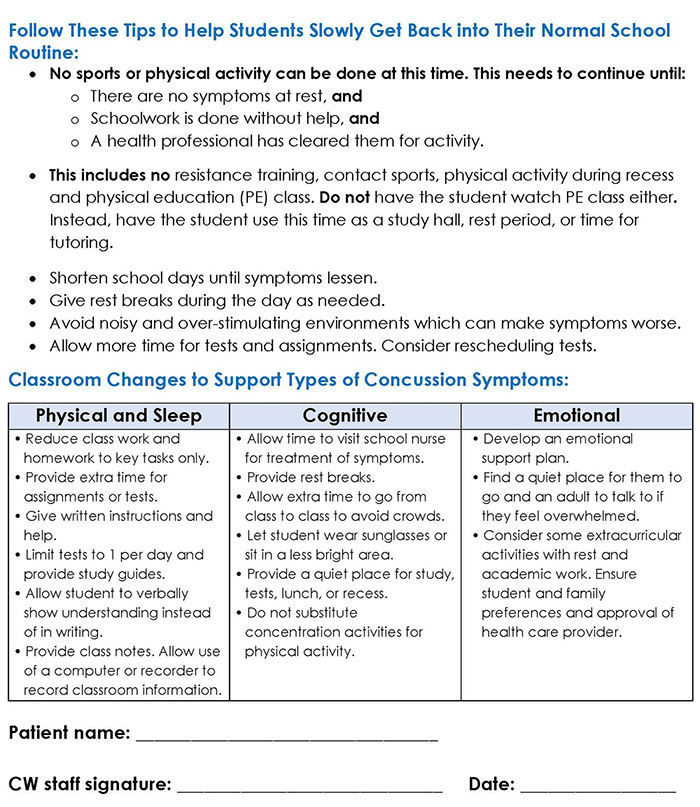
What Should I Know About My Child Going Back to School?
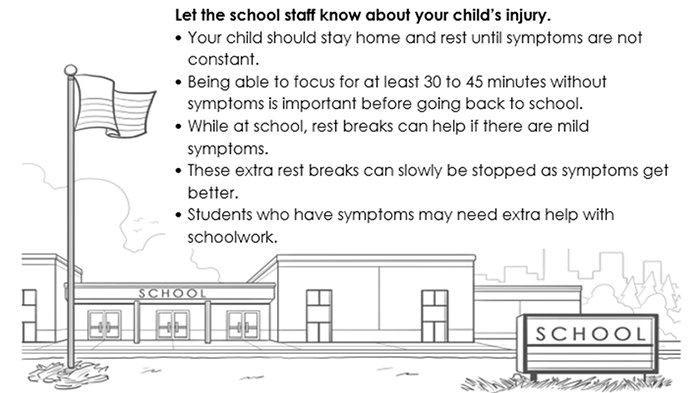
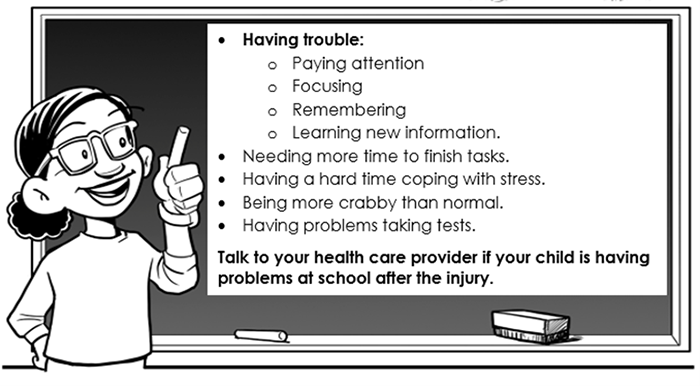
School Staff Should Watch for Symptoms That Get Worse, Such As:
Your Child Must Be seen by Their Health Care Provider To Return to Sports Or Other Physical Activities
- Tell the gym teacher and all coaches about the injury and symptoms. Your child will need help managing activities. Parents, teachers, coaches, and athletic trainers can help prevent another head injury.
- It is normal for your child to feel upset and angry about missing sports or activities. After a head injury, a full recovery will lower the chances of getting hurt again. Remember, missing a game is better than missing the whole season.
- Once symptoms are gone for 48 hours and your child is back at school without extra rests, check with your health care.
Step-By-Step Return to Activity or Play
Draft Number: 1092Revision Date: June 1, 2026
This content was created to help you care for your child and/or family member. It does not take the place of medical care. Talk with your healthcare provider for diagnosis, treatment and follow-up.